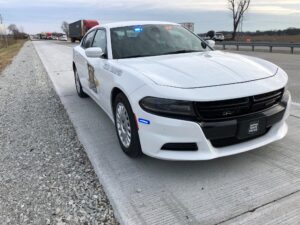

(STATEWIDE) – With winter weather moving into Indiana, Indiana State Police are urging drivers to slow down and adjust their habits when snow and ice make road conditions dangerous.
Indiana State Police Sgt. John Perrine said heavy snowfall often exposes the same problems year after year — drivers moving too fast for conditions and overestimating what their vehicles can handle.
“Just simply don’t drive like a knucklehead,” Perrine said Thursday morning. “When you have to get out and drive in this, keep safety at the forefront of your mind and be respectful of other drivers.”
Perrine cautioned that modern vehicle technology can create a false sense of confidence during winter storms.
“Some people are naïve about having all-wheel drive or four-wheel drive,” he said. “They think because they have that, they can drive faster. We have just as many or more all-wheel-drive vehicles slide off into ditches than we do other vehicles. That technology doesn’t mean you can drive faster than conditions allow.”
According to Perrine, one of the most critical — and often overlooked — safety factors is tire condition.
“If you’re questioning whether or not your tires are good enough to drive in this, then the answer is probably not,” he said. “I know tires aren’t cheap, but you need them to work at the best level they can.”
Drawing on more than two decades in law enforcement, Perrine said impatience is the most common factor he sees in winter crashes.
“People drive too fast for the conditions because they’re in a hurry,” he said. “They get impatient with drivers who are slowing down, and that’s when crashes happen. The name of the game is just to slow down.”
Perrine also urged drivers to give snowplows plenty of space while crews work to clear roads.
“Give them all the room they deserve,” he said. “They’re doing their best to make roads passable. When drivers get aggressive around plows, it just makes the roads unsafe for everyone.”
What State Police Recommend Before Snow Falls
-
Tires: Cold temperatures reduce tire pressure. Check inflation using the recommended pressure listed inside the driver’s door or owner’s manual — not the tire sidewall. Tread depth should be at least 2/32 of an inch. Don’t forget to check your spare.
-
Snow tires: All-weather tires work for most conditions, but snow tires can significantly improve traction on snow and ice. All-wheel drive and traction control help manage traction but do not increase it.
-
Battery: Cold weather strains batteries. Have yours tested along with the charging system.
-
Wipers: Replace worn or damaged wiper blades.
-
Washer fluid: Top off with winter-grade fluid.
-
Emergency kit: Keep a blanket, flashlight, jumper cables, flares or emergency lights, and consider a small shovel and sand or kitty litter.
When You’re On The Road
-
Dress for the weather — a short trip can turn into a long wait.
-
Clear snow and ice from windows, mirrors, and lights so you can see and be seen.
-
Leave early.
-
Slow down.
-
Increase following distance to eight to ten seconds.
-
Accelerate and brake gently.
-
Turn off cruise control.
-
Buckle up and put the phone down.
State Police say adjusting expectations — and speed — during winter weather can prevent crashes and keep emergency crews from being stretched thin when conditions worsen.