

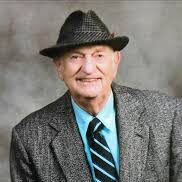
When word spread that Gene White had passed away, it stirred up a familiar Indiana conversation.
People talked about Milan.
They talked about 1954.
They talked about Hoosiers.
And almost inevitably, someone asked the question we always ask when one of the real men behind that story leaves us:
Who was he in the movie?
It’s a fair question. It’s also the wrong one.
Gene White wasn’t Jimmy Chitwood. He wasn’t the hot-headed shooter or the quiet prodigy or the player who demanded the ball with the season on the line. And if you go looking for a neat one-to-one character match in Hoosiers, you’ll come up empty.
But if you want to understand the soul of the story — the part that made the story worth telling in the first place — you’ll find Gene White everywhere.
The Work That Doesn’t Make the Movie
Gene White was the starting center on Milan’s 1954 state championship team. He was 5-foot-11, undersized even by the standards of his day, and he didn’t lead the team in scoring. What he did was rebound, defend, set screens, and make sure his teammates could do what they did best.
He did the work that doesn’t get remembered unless it’s missing.
That’s the part of Hoosiers we tend to forget — the truth hiding underneath the cinematic speeches and swelling music. Championships aren’t built on one shot, no matter how iconic that shot becomes. They’re built on discipline. On trust. On players who accept their role and do it well, even when no one is watching.
Gene White was that kind of player.
And he was that kind of man.
A Life Bigger Than a Season
After Milan, Gene White’s story didn’t freeze in amber the way movie stories do. He went on to become the first person in his family to attend college. He earned degrees in math and education. He served his country in the U.S. Army Signal Corps, working on advanced research that put him at the forefront of emerging technology.
Then he came home — not to relive the past, but to invest in the future.
For nearly four decades, Gene White taught math and physics in southeastern Indiana classrooms. He coached. He mentored. He challenged students who didn’t yet believe they were capable of more. He led teams. He shaped young lives. He stayed.
If Hoosiers is about belief — about trusting that preparation matters — Gene White spent the rest of his life proving that lesson every single day.
The Quiet Legacy
Late in life, the honors came. He was inducted into the Indiana Basketball Hall of Fame with his teammates, and later recognized individually. He received the Sagamore of the Wabash — twice. Not for a single game or a single season, but for a lifetime of service, leadership, and integrity.
But the truest measure of Gene White’s legacy won’t be found in plaques or banners.
It’s found in the students who learned to think more clearly because he taught them.
In the players who learned accountability because he coached them.
In the communities that are better because he showed up and stayed engaged long after the spotlight moved on.
That’s the part of the Milan story Hollywood can’t really capture.
Who Gene White Was in Hoosiers
So if we insist on answering the question — Who was Gene White in the movie? — the most honest answer is this:
He was the foundation.
He was the reason the story worked at all.
He was every rebound that led to a fast break. Every screen that freed a shooter. Every possession that didn’t end in applause but mattered just the same.
Gene White didn’t need a character written for him. His life was the proof that the values Hoosiers celebrates weren’t fictional — they were lived, quietly and consistently, by real Hoosiers.
And that’s something far better than a movie role.
That’s a legacy.