
There are certain things that tell you what time of year it is without ever looking at a calendar.
The first really cold morning tells you winter is coming.
The first night you hear cicadas tells you summer has settled in.
And around here, if somebody starts talking about fried chicken, turtle soup, raffle tickets and a beer garden in the same sentence, you know it’s church festival season.
We are right smack in the middle of it.
St. Mary’s in Greensburg had its festival last weekend, where the parish’s 50/50 raffle alone paid out more than $22,000, including a $19,285 top prize. And this weekend, three more longtime Catholic church festivals will take their turn.
St. Catherine of Siena at Enochsburg holds its 88th annual church picnic Sunday. The menu includes the famous Fireside Inn fried chicken or roast beef, along with mock turtle soup, pies and all the usual festival trimmings.
Then Labor Day itself brings two more.
St. Anthony of Padua in Morris celebrates its 109th Labor Day Festival, with chicken dinners, games, a beer garden, raffles and even an Elvis tribute singer. Its big raffle includes more than $20,000 in cash and prizes.
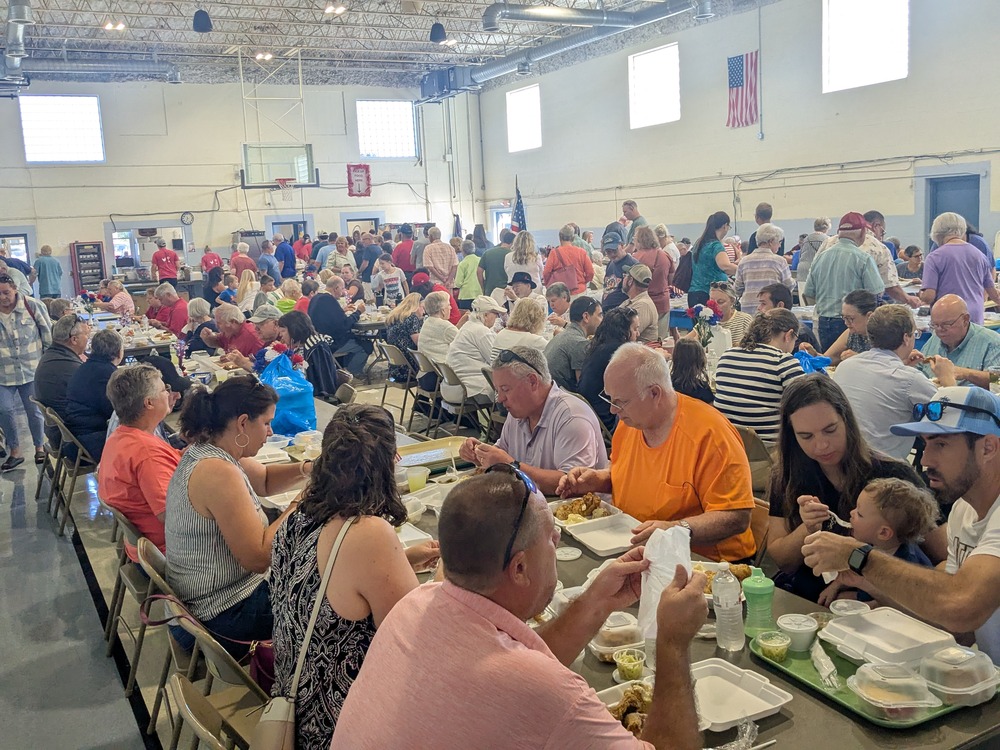
A crowd enjoys dinner at the 2025 St. Anthony of Padua Labor Day Festival in Morris. (Provided photo)
And St. Peter’s (just over four miles west of IN-1 on St. Peter’s Road) celebrates its 105th Labor Day Festival, featuring country fried chicken, turtle soup, quilts, children’s games, a country store and what the parish itself describes as “old fashioned country hospitality.”
Think about those numbers for a second.
Eighty-eight years.
One hundred five years.
One hundred nine years.
Lots of things have come and gone during that span.
Businesses have opened and closed. Schools have consolidated. Roads have changed. Entire industries have appeared that nobody attending those first festivals could possibly have imagined.
And yet, every year, somebody still gets up early and starts frying chicken.
That’s pretty remarkable.
Church festivals are one of those things that are easy to take for granted when you’ve lived around here long enough.
They are just something we do.
You go eat.
You buy a raffle ticket.
You run into somebody you haven’t seen since last year’s festival.
You stand around talking for 25 minutes when you originally intended to be there for 10.
And you inevitably leave carrying more food than you planned to buy.
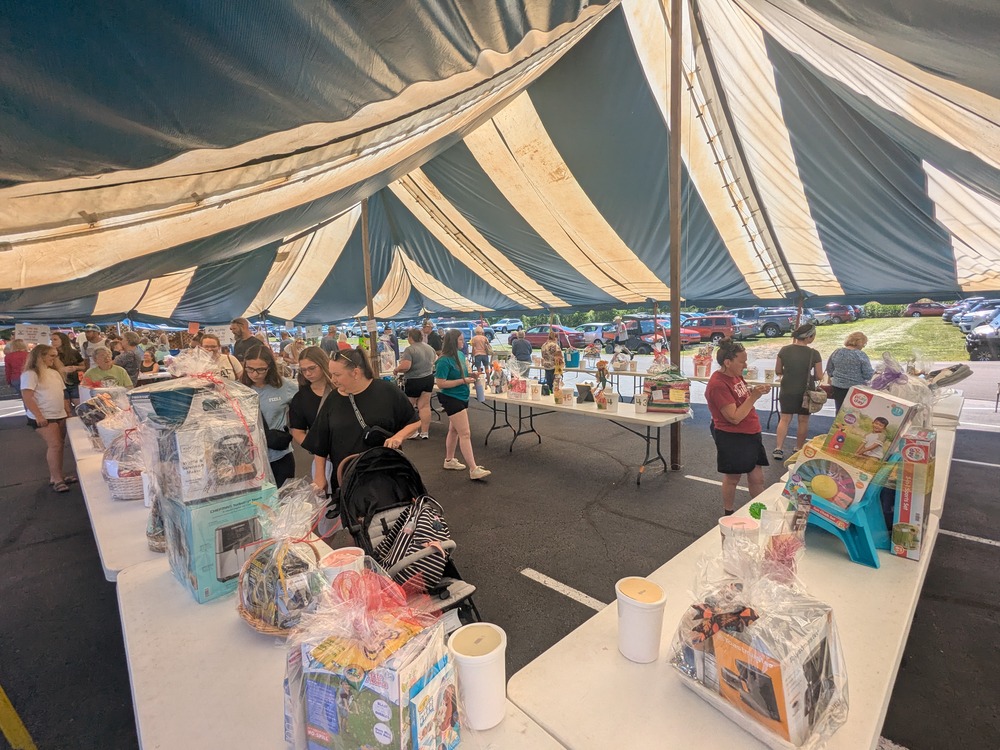
Festival-goers browse raffle baskets at the 2025 St. Anthony of Padua Labor Day Festival in Morris. (Provided photo)
But there’s something bigger going on.
These festivals don’t happen because somebody hires an event company to come in and put one on.
They happen because people work.
A lot.
Somebody sets up tables.
Somebody makes pies.
Somebody sells tickets.
Somebody works the kitchen.
Somebody cleans up.
Somebody has spent the previous several months asking local businesses to donate things for a raffle.
And somewhere in every parish is a person who knows where the extension cords are, which refrigerator doesn’t shut quite right and exactly how many pounds of chicken they went through last year.
Those people are the real infrastructure behind a church festival.
And in a world where we increasingly pay somebody else to do almost everything for us, there is something refreshingly old-fashioned about that.
Neighbors working beside neighbors.
Parents working beside their kids.
People in their 70s doing the same job they were doing at the festival when they were 40.
Kids growing up assuming this is simply what Labor Day weekend looks like.
That’s how traditions survive.
Not because somebody declares them important.
Because people keep showing up.
There is also something particularly Southeastern Indiana about the whole thing.
Catholicism has deep roots here, especially in the little communities scattered across Ripley, Franklin and Decatur counties.
You don’t have to be Catholic to know the names.
Enochsburg.
Morris.
St. Peter’s.
St. Mary’s.
They aren’t merely churches on a map. For generations, they have been gathering places.
And the annual festival is the one weekend when the circle gets a lot bigger.
Catholics come.
Non-Catholics come.
People who haven’t been inside the church in years come.
People whose grandparents belonged there come.
People who just heard the chicken is good come.
Nobody checks your credentials at the pie table.
That’s part of what I like about these things.
They’re church events, certainly. They’re fundraisers, certainly.
But they’re also little annual reunions for entire communities.
And perhaps that’s why they’ve lasted.
There are plenty of newer, slicker ways to raise money.
You can do everything online now. Send an email. Post a QR code. Click a button and donate twenty bucks without ever putting on your shoes.
Efficient? Absolutely.
But nobody ever ran into an old high school classmate while clicking a QR code from the couch.
Nobody ever smelled chicken frying on the internet.
Nobody ever bought a piece of pie from somebody’s grandmother through Venmo and then stood there talking to her for ten minutes.
Something gets lost when everything becomes efficient.
Church festivals are wonderfully inefficient.
They require hundreds of conversations, thousands of little jobs and an enormous amount of human contact.
Maybe that’s exactly why they’re worth keeping.
So if you find yourself at one of the festivals this weekend, eat the chicken.
Buy the raffle ticket.
Have the pie.
And before you leave, look around at all the people working behind the tables and in the kitchens.
A festival doesn’t make it to its 88th, 105th or 109th year by accident.
Somebody has to care enough to make sure there’s a next one.
Around here, apparently, a whole lot of people still do.